Cultures
Choosing the right cultures for your application is the basis of your success. Here you will find the different ranges of cultures available.

CR-SAVORY 01 Frozen 500 u
A defined adjunct culture blend which enhances the overall flavor intensity of the cheese by accentuating important flavor notes.
It enhances the balanced, mellow, rounded and clean flavors and suppresses unwanted flavors like sour, bitter and flat.
The culture contains a nisin producing strain for promotion of bacteria lysis.
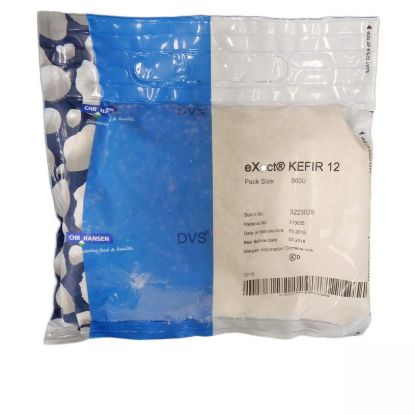
eXact KEFIR 12 Frozen 500 u
Blend of 12 aromatic eXact Kefir cultures.
The eXact KEFIR culture produces texture and flavor characteristic of modern Kefir.
The eXact Kefir 12 should be use together with a YoFlex to differentiate flavor and to obtain 14 Kefir cultures.
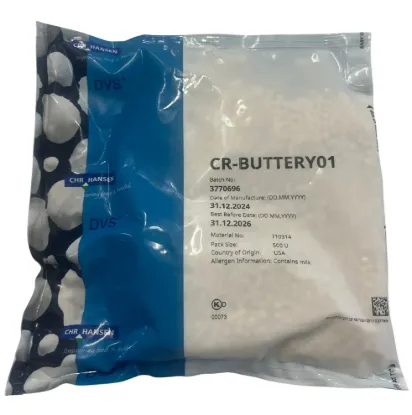
CR-BUTTERY 01 Frozen 500 u
A defined adjunct culture blend which enhances the overall flavor intensity of the cheese by accentuating important flavor notes.
It enhances the balanced, mellow, rounded and clean flavors and suppresses unwanted flavors like sour, bitter and flat.
The culture contains a nisin producing strain for promotion of bacteria lysis.
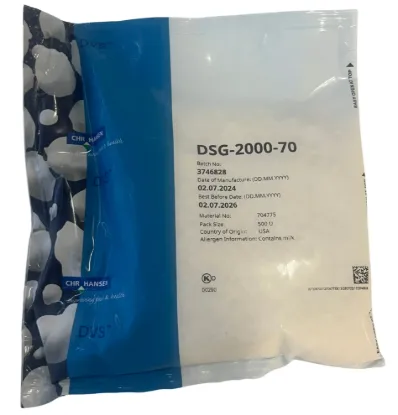
DSG-2000-70 Frozen 500 u
Mesophilic eXact culture, type L.
The culture produces diacetyl flavor and a medium level of CO2.
DSG 2000 cultures can be used in any cultured dairy product where a balanced acid and diacetyl flavor is desired.
These cultures are formulated to produce a shorter make time without compromising flavor.
Easy-Set I410 Frozen 500 u
Very high active thermophilic culture blend for continous direct vat set use.
The strains are specially selected for their phage resistance and ability to produce lactic acid quickly.
DVS Sinergia 1.3 Frozen 500 u
Very high active thermophilic culture blend for contimuous direct vat set use.
The strains are specially selected for their phage resistance and liability to produce alctic acid quickly.
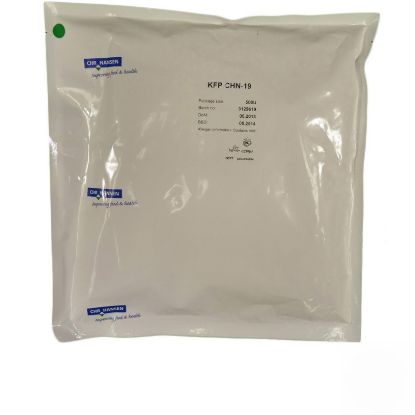
CHN-19 Frozen 500 u KFP
Mesophilic aromatic culture, type LD.
The culture produces flavor and CO2.
This range provides cultures with fast acidification properties at a low inoculation rate.
This Chr.Hansen culture range provides a complete line of Kosher for Passover blends.
Easy-Set I450 Frozen 500 u
Very high active thermophilic culture blend for continous direct vat set use.
The strains are specially selected for their phage resistance and ability to produce lactic acid quickly.
The culture is primarily applied in the production of Pasta Filata cheese types, e.g. Mozzarella and Pizza cheese types.
Easy-Set FLORA C1070 Frozen 500 u
This Chr.Hansen EASY-SET FLORA culture blend is for continuous direct vat set use at low inoculation rates.
The culture contains multiple, but well defined mesophilic homofermentative strains, type O.
The strains are carefully selected for their mild flavor contribution, high phage resistance and ability to produce lactic acid quickly.
The culture does not contribute to eye formation in the cheese.
The cultures are primarily used in the manufacture of Continental cheese types with no requirement for eye formation (Edam, Gouda, Danbo).
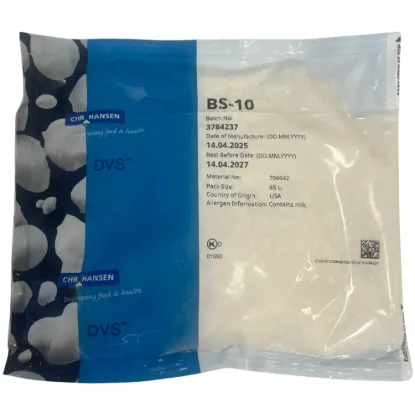
BS-10 Frozen 65 u
Mesophilic homofermentative lactic acid bacteria culture.
The culture offers the benefits of enhancing clean flavors as well as suppressing unwanted bitter flavors throughout shelf life due to nisin being one of the metabolites.
Nisin is a peptide produced by certain strains of Lactococcus lactis.
It possesses antimicrobial activity against several Gram-positive bacteria including spore-formers such as Clostridium sp.
and Bacillus sp.
BioSafe cultures are primarily applied in cheeses, particularly Dutch- and Continental-type cheeses.
In Feta and Cottage cheese, they can be used to suppress post acidification.
High concentrations of nisin can have a negative influence on the growth of Propionibacteriaceae.
In case of use in Swiss, Maasdammer or emmenthaler type cheeses, a validation of all culture combinations should be made prior to industrial use.
Any change in production parameters, ingredients and culture rotation might have an effect on the concentration of nisin produced and should also be validated before implementation.
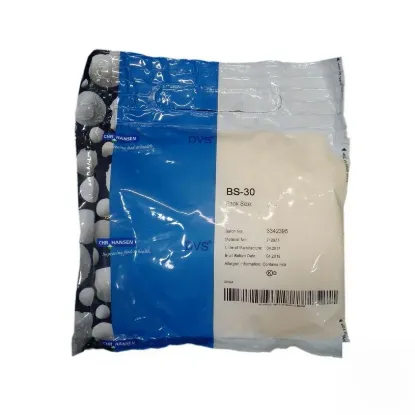
BS-30 Frozen 65 u
Mesophilic homofermentative lactic acid bacteria culture.
The culture offers the benefits of enhancing clean flavors as well as suppressing unwanted bitter flavors throughout shelf life due to nisin being one of the metabolites.
Nisin is a peptide produced by certain strains of Lactococcus lactis.
It possesses antimicrobial activity against several Gram-positive bacteria including spore-formers such as Clostridium sp.
and Bacillus sp.
CHD-2 Frozen 500 u
Multiple mixed strain Mesophilic Aromatic Culture, type D.
The culture produces aroma and CO2.
The culture contains a very low concentration of Leuconostocs.
The culture is primarily applied in the production of soft cheeses (stabilized soft cheeses, specialties) and fermented milk.
The culture can be used alone or more frequently in combination with mesophilic or SSC cultures to enhance the milky and fresh taste.
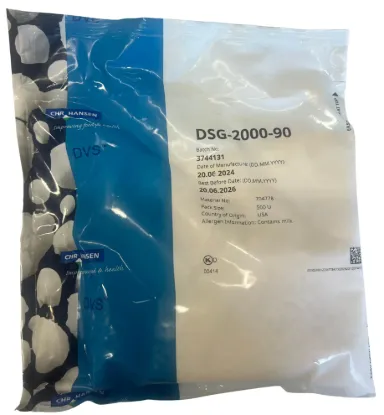
DSG-2000-90 Frozen 500 u
Mesophilic eXact culture, type L.
The culture produces diacetyl flavor and a medium level of CO2.
DSG 2000 cultures can be used in any cultured dairy product where a balanced acid and diacetyl flavor is desired.
These cultures are formulated to produce a shorter make time without compromising flavor.
DSG 2000 cultures are ideal for manufacturing the following products:
- Buttermilk
- Sour cream
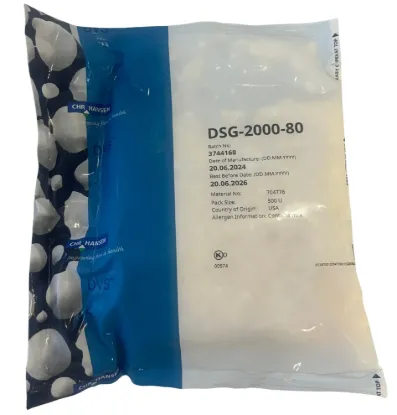
DSG-2000-80 Frozen 500 u
Mesophilic eXact culture, type L.
The culture produces diacetyl flavor and a medium level of CO2.
DSG 2000 cultures can be used in any cultured dairy product where a balanced acid and diacetyl flavor is desired.
These cultures are formulated to produce a shorter make time without compromising flavor.
DSG 2000 cultures are ideal for manufacturing the following products:
- Buttermilk
- Sour cream
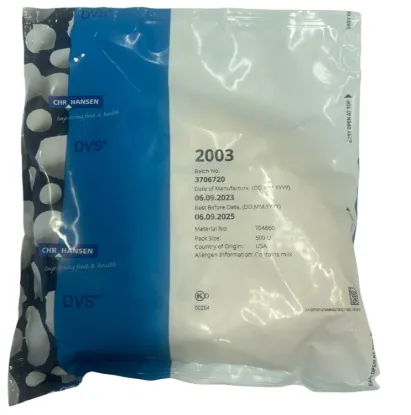
DVS-2003 Frozen 500 u
This Chr.Hansen DVS culture contains defined mesophilic strains and is for continous direct vat set use.
The culture does not produce CO2 (homofermentative).
The culture is primarily applied in the production of cheeses with a closed texture, e.g. Cheddar, Feta and Cottage cheese.
The culture can be applied in other fermented dairy products, in combination or not with other lactic cultures.
DVS Sinergia 1.1 Frozen 500 u
Very high active thermophilic culture blend for continous direct vat set use.
The strains are specially selected for their phage resistance and ability to produce lactic acid quickly.
CC-08 Frozen 500 u
Mesophilic homofermentative culture, type O.
This culture contains specially selected strains chosen for their phage resistance and ability to produce lactic acid quickly.
This culture does not produce CO2.
DVS Sinergia 1.4 Frozen 500 u
Very high active thermophilic culture blend for continous direct vat set use.
The strains are specially selected for their phage resistance and ability to produce lactic acid quickly.
The culture is primarily applied in the production of Pasta Filata cheese types, e.g. Mozzarella and Pizza cheese types.
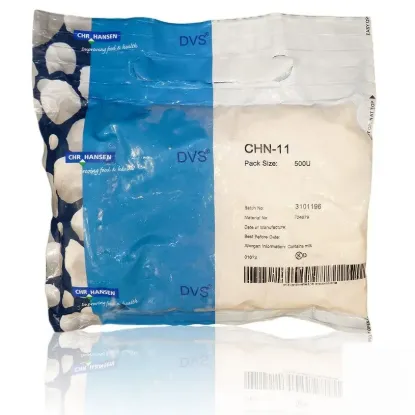
CHN-11 Frozen 500 u
Mesophilic aromatic culture, type LD.
The culture produces flavor and CO2.
This range provides cultures with fast acidification properties at a low inoculation rate.
The culture is primarily used in the manufacturing of Continental semi-hard cheese varieties with eyes, e.g. Gouda, Edam, Leerdam and Havarti.
Easy-Set I405 Frozen 500 u
Very high active thermophilic culture blend for continous direct vat set use.
The strains are specially selected for their phage resistance and ability to produce lactic acid quickly.
Easy-Set I415 Frozen 500 u
Very high active thermophilic culture blend for continous direct vat set use.
The strains are specially selected for their phage resistance and ability to produce lactic acid quickly.
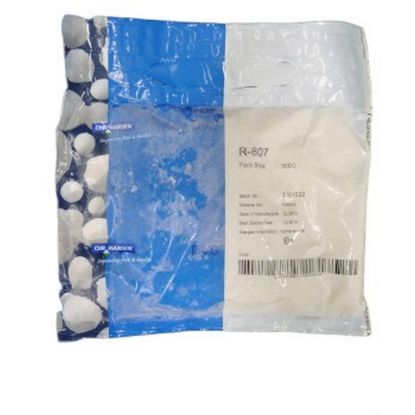
R-607 Frozen 500 u
Mesophilic homofermentative culture, type O.
This Chr.Hansen culture range provides phage resistant defined strains for continuous Direct Vat Set (DVS) use.
This culture contains specially selected strains chosen for their phage resistance and ability to produce lactic acid quickly.
This culture does not produce CO2 .
The culture is primarily applied in the production of cheeses with a closed texture, e.g. Cheddar, Feta and Cottage cheese.
The culture can be applied in other fermented dairy products, in combination or not with other lactic cultures.
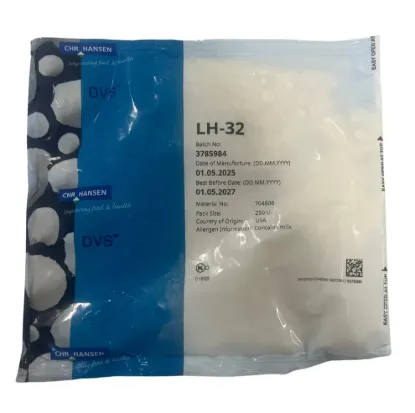
LH-32 Frozen 250 u
Defined thermophilic lactic acid culture.
The culture enhances the overall flavor intensity of the cheese by accentuating important flavor notes, and especially nutty flavor.
The culture is primary applied in the production of Italian and Swiss cheese varieties.
The culture can be applied alone or in combination with other lactic cultures, e.g. Streptococcus thermophilus and Lactobacillus delbrueckii subsp.bulgaricus and LD culture.
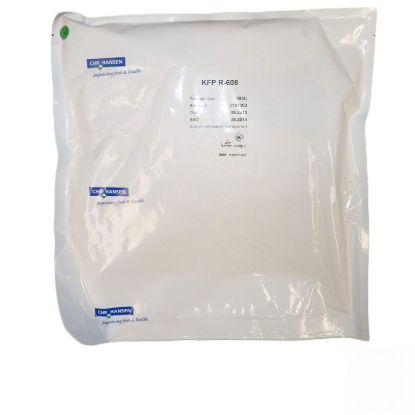
R-608 Frozen 500 u (KFP)
This Chr.Hansen DVS culture contains defined mesophilic strains and is for continous direct vat set use.
The culture provides fast lactic acid production and high phage robustness without any CO2 production (homofermentative).
The DVS KFP range represents Kosher for Passover approved cultures.
The culture is primarily applied in the production of cheeses with a closed texture, e.g. Cheddar, Feta and Cottage cheese.
The culture can be applied in other fermented dairy products, in combination or not with other lactic cultures.
The culture is Kosher approved for year round use including Passover.
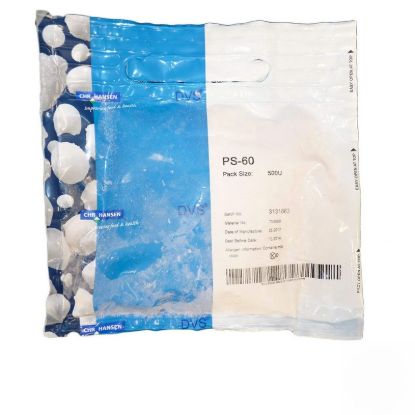
PS-60 Frozen 500 u
Selected propionic acid bacteria culture, highly concentrated.
The culture is primarily used for the production of Swiss-type cheeses, such as Emmental, Gruy re, Greve and similar types where the typical propionic acid aroma and eye formation are desired.
The culture is normally applied in combination with lactic cultures, such as Streptococcus thermophilus , Lactobacillus helveticus, Lactobacillus delbrueckii subsp.bulgaricus and LD cultures.
The culture ferments lactate resulting in the formation of propionic and acetic acids and large amounts of carbon dioxide.
Propionic acid cultures grow slowly in milk and have a low proteolytic activity.