






Fromagex Products
From cultures to packaging, including equipment, here is our range of products.
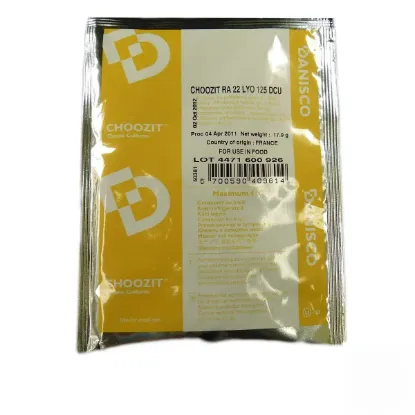
RA 22 Freeze-dried 125 DCU
Freeze-dried concentrated lactic starter for the direct vat inoculation of milk and milk bases.
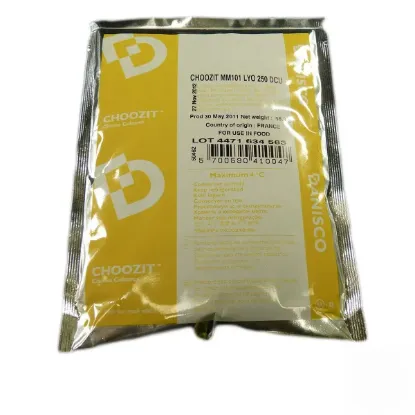
MM 101 Freeze-dried 250 DCU
A blend of defined strains of lactic bacteria for direct vat inoculation of milk, milk bases.
The culture is a freeze-dried powder.
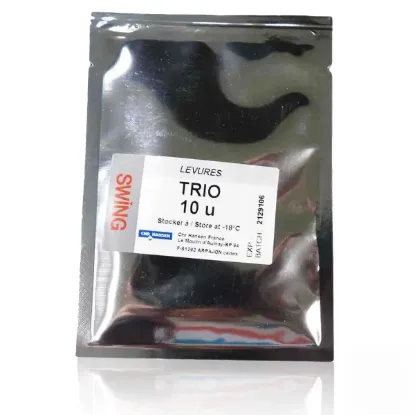
LAF-TRIO Swing Freeze-dried 10 u
Selected yeast strains with origin in traditional French cheese making.
SWING LAF TRIO is a blend of defined yeast strains.
They have been especially selected for their ablity to prevents the growth of contaminant at the surface of the cheese.
The synergetic effect from the strains inhibits contaminant, e.g. blue molds and mucor.
Yeast cultures may be used in lactic curd, soft cheeses with washed surface and Continental cheese with natural rind.
Yeast cultures may be used in lactic curd, soft cheeses with washed surface and Continental cheese with natural rind.
The culture works in different ways:
- by generation a protective film on the cheese surface
- by allowing the consumption of residual sugars
- by accelerating the curd neutralisation.
The culture works in different ways:
- by generation a protective film on the cheese surface
- by allowing the consumption of residual sugars
- by accelerating the curd neutralisation.
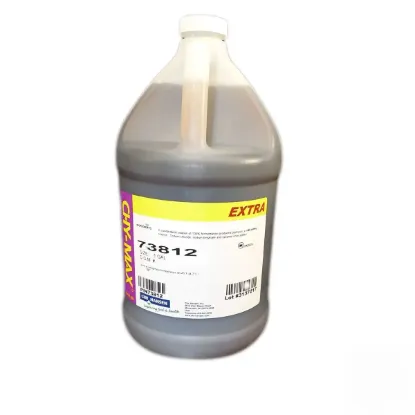
CHY-MAX Extra coagulant 1 gal
CHY-MAX Extra is a pure chymosin produced by submerged fermentation on a vegetable substrate with Aspergillus niger var.
awamori kept under contained conditions and not present in the final product.
The product contains a milk-clotting enzyme which is highly specific for kappa-casein, resulting in very good curd formation.
The general proteolitic activity also has a significant influence on the flavor and texture development of cheeses.
The active milk-coagulating enzyme is chymosin (EC 3.4.23.4).
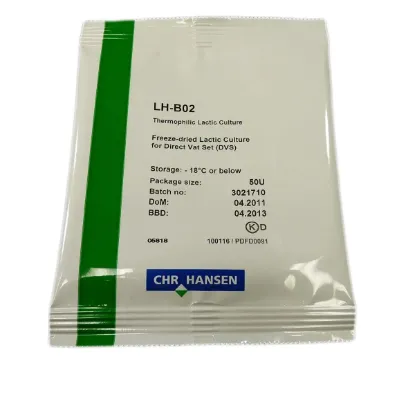
LH-B02 Freeze-dried 50 u
Defined thermophilic lactic acid culture.
The culture enhances the overall flavor intensity of the cheese by accentuating important flavor notes.
The culture is primary applied in the production of Italian and Swiss cheese varieties.
The culture can be applied alone or in combination with other lactic cultures, e.g. Streptococcus thermophilus and Lactobacillus delbrueckii subsp.bulgaricus and LD culture.
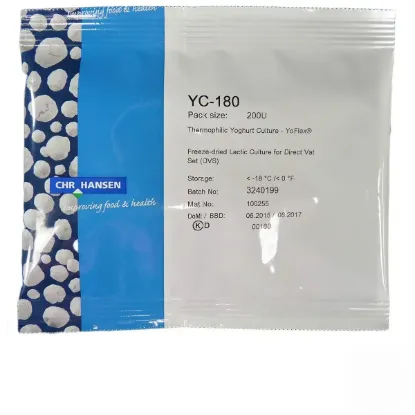
YC-180 Freeze-dried 200 u
Thermophilic YoFlex culture.
The culture will produce yoghurt with medium flavor, high viscosity and medium postacidification.
Suitable for cup set, stirred and drinking yoghurt.
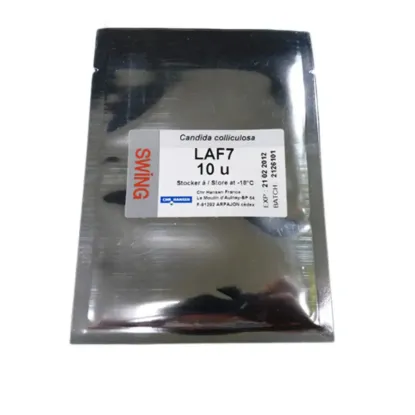
LAF 7 Swing Freeze-dried 10 u
Selected yeast single strain with origin in traditional French cheese making.
SWING LAF cultures are an important tool in cheese making since they may be used to affect curd neutralization, texture and flavor.
Yeasts are common in traditional raw milk cheeses but arerarely found in industrially produced cheeses.
Therefore adding selected and controlled yeast cultures to the cheese may improve quality.
The yeast culture may be used to provide a balanced flavor and medium to high levels of CO2 formation in Kefir type products.
The culture will provide flavor and medium to high CO2 formation.
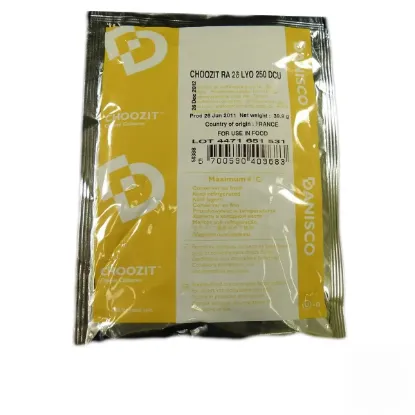
RA 26 Freeze-dried 250 DCU
Lyophilized lactic ferment concentrate for the direct inoculation of milk and milk bases
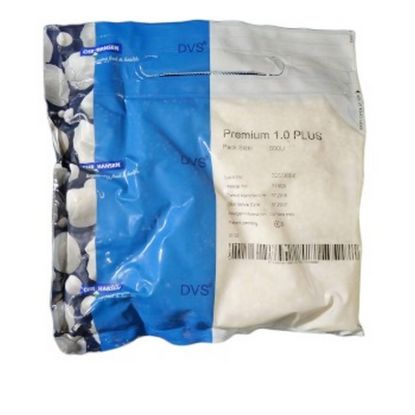
PREMIUM 1.0 PLUS Frozen 500 u
Thermophilic YoFlex culture.
The culture will produce yoghurt with mild flavor, extra high viscosity and low post-acidification.
Suitable for stirred and set yoghurt.
The culture is ideal for manufacturing of Greek yogurt.
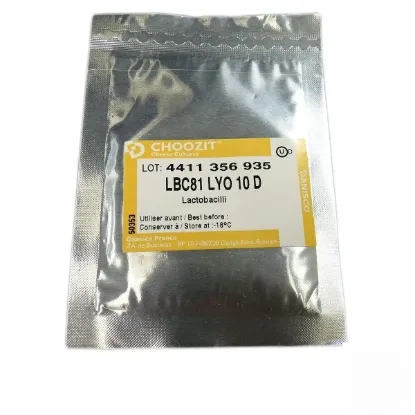
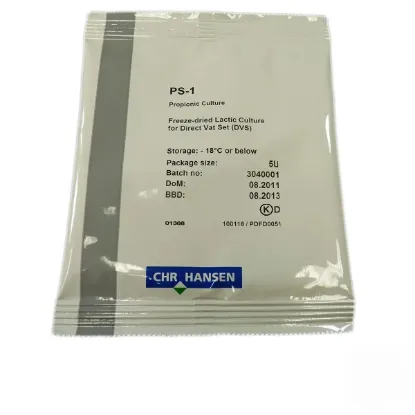
PS-1 Freeze-dried 5 u
Selected propionic acid bacteria culture.
The culture is primarily used for the production of Swiss-type cheeses, such as Emmental, Gruy re, Greve and similar types where the typical propionic acid aroma and eye formation are desired.
The culture is normally applied in combination with lactic cultures, such as Streptococcus thermophilus , Lactobacillus helveticus, Lactobacillus delbrueckii subsp.bulgaricus and LD cultures.
The culture ferments lactate resulting in the formation of propionic and acetic acids and large amounts of carbon dioxide.
Propionic acid cultures grow slowly in milk and have a low proteolytic activity.
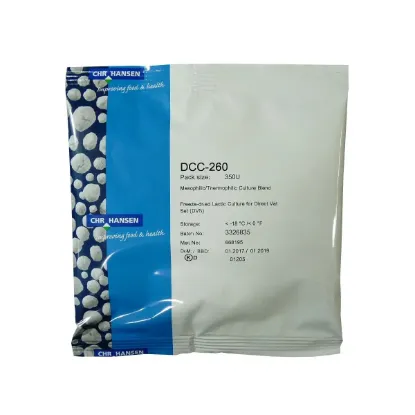
DCC-260 Freeze-dried 350 u
Aromatic culture blend.
The DCC culture range provides cultures with very fast acidification properties at a low inoculation rate.
The culture produces flavor and CO2.
The culture is primarily used in the manufacturing of Dutch and Continental semi-hard cheese varieties with eyes, e.g. Gouda and Edam.
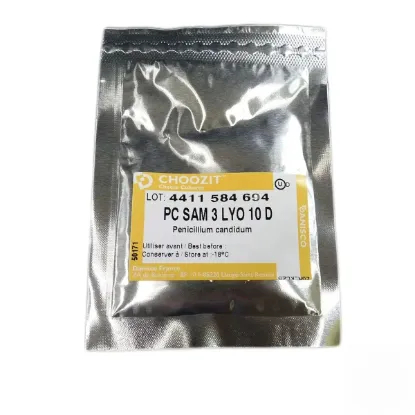
SAM 3 Freeze-dried 10 D
Maturation/ ripening culture made up of Penicilium candidum spores.
Penicilium candidum is the ordinary name of Penicilium camemberti.
Direct inoculation of cheese milk.
Dilution for use in spray just before use.
We do not accept any liability in case of undue application.
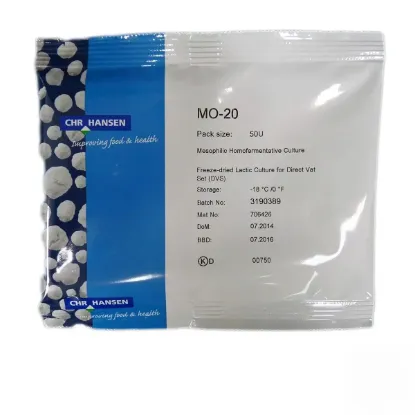
MO-20 Freeze-dried 50 u
Mesophilic homofermentative culture, type O.
This culture contains specially selected strains chosen for their phage resistance and ability to produce lactic acid quickly.
This culture does not produce CO2.
The culture is primarily used in the manufacture of Continental cheese types with no eyes and short texture (e.g.Pecorino) and soft cheese specialties.
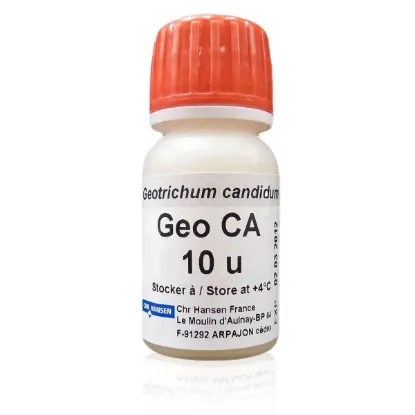
GEO CA Swing Liquid 10 u
A selected single strain ripening culture with origin in traditional French cheese making.
The SWING GEO cultures contributes to the flavor, texture, and appearance of cheese.
The culture is available as a conidia suspension.
The culture may be used in production of many types of cheeses including white mold surface (e.g.Camembert type), smeared and mixed rind, soft and semi-hard, and blue mold cheeses.

MA 14 Freeze-dried 250 DCU
A blend of defined strains of lactic bacteria for direct vat inoculation of milk, milk bases and other food applications.
The culture is a freeze-dried powder.
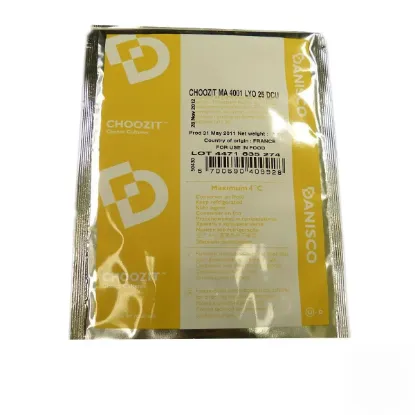
MA 4001 Freeze-dried 25 DCU
Freeze-dried concentrated lactic starter for the direct vat inoculation of milk and milk bases.
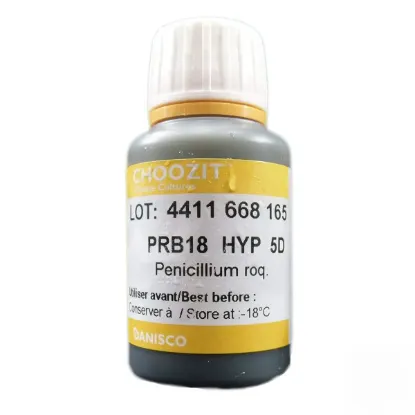
PRB 18 Liquid - Hyptonic 5 D
Blue mould in liquid suspension form for cheese production.
Direct inoculation of cheese milk.
We do not accept any liability in case of undue application.
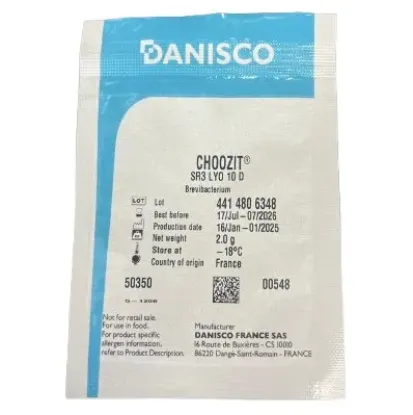
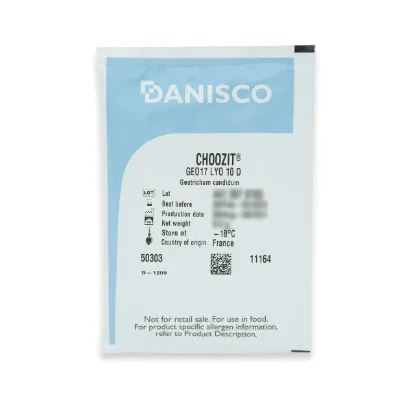
GEO 17 Freeze-dried 10 D
Maturation/ ripening culture made up of Penicilium candidum spores.
Penicilium candidum is the ordinary name of Penicilium camemberti.
Direct inoculation of cheese milk.
Dilution for use in spray just before use.
We do not accept any liability in case of undue application.
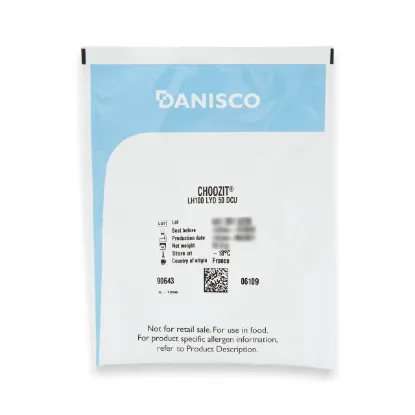
LH 100 Freeze-dried 50 DCU
Freeze-dried concentrated lactic starter for the direct vat inoculation of milk and mil bases.
Store at temperature at 4 degr s in dry atmosphere.
When stored at negative temperature, keep the sachet at room temperature for 30 to 60 minutes before opening.
If not, the performance of culture is affected.
Prolonged exposure at room temperature will reduce is in powder form.
Add directly to the manufacturing milk as soon as the agitation blades of the vat are covered with milk.
Avoid foam and air introduction in the milk.
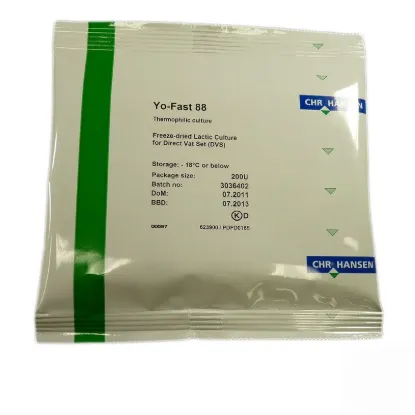
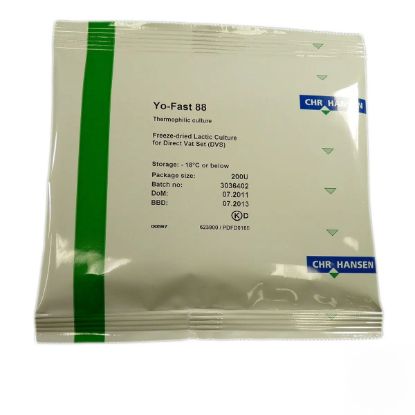
YO-FAST 88 Freeze-dried 200 u
The Yo-Fast series contains blended strains in a concentrated frozen pellet form to produce yoghurt with unique flavor and body characteristics.
The culture will produce a fermented milk with very high body, mild flavor and minimal/medium post-acidification.
Suitable for stirred, drinking and frozen yoghurt.
MM 100 Freeze-dried 50 DCU
Freese-dried concentrated lactic starter for the direct vat inoculation of milk and milk bases.
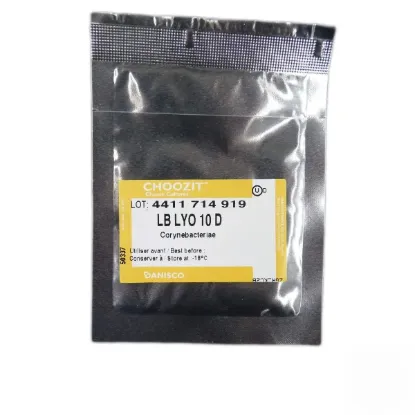
MM 100 Freeze-dried 250 DCU
A blend of defined strains of lactic bacteria for direct vat inoculation of milk, milk bases.
The culture is a freeze-dried powder.